A complete guide to moving from Canada to the Netherlands

Key Takeaways
Moving abroad requires careful coordination to manage logistics, customs, and initial residency requirements effectively. Here is a summary of the critical steps for your relocation journey.
- Draft a comprehensive moving timeline 6 to 9 months before your departure date.
- Research residency categories and permit requirements early to ensure all eligibility criteria are met.
- Separate your possessions into categories to determine what ships best via freight versus what should be sold or donated.
- Review prohibited item lists to avoid potential seizures or fines during cargo inspections.
- Secure documentation for BSN registration immediately upon settling into your new Dutch home.
Planning your move to the Netherlands
Creating a realistic relocation timeline
Planning an overseas move is a significant undertaking that requires a structured approach to manage moving parts effectively. You should begin your preparations six to nine months before your target departure date to allow sufficient time for administrative and practical tasks. By starting early, you can streamline your international transition and ensure every critical step is finished well before the final packing day. Taylor International assists families in establishing these timelines through a lens of transparency and technical precision.
Essential documents to organize before you leave
Before relocating, you must compile an organized file containing all original vital records. This includes passports, birth certificates, marriage certificates, and medical records, all of which should be kept in a secure, waterproof travel binder. You might also consult resources like our expert advice checklists to ensure you have not overlooked any key jurisdictional documents. Having digital backups of these materials in a secure cloud environment provides an additional layer of safety should physical documents be misplaced during transit.
Downsizing and decluttering for an overseas move
Downsizing is arguably the most effective way to lower shipping costs and manage space limitations in urban environments like Amsterdam. Consider hosting a sale or donating items that do not hold significant emotional or financial value to reduce the overall volume of your shipment. This process forces a practical re-evaluation of your household needs and simplifies your arrival in a new country. When you are ready to ship your remaining goods, you can rely on the expertise found when hiring an international moving company to handle the inventory and logistics with professional efficiency.
Understanding visa and residence requirements

Overview of common visa categories for Canadians
Canadians often look toward the Netherlands for work, study, or independent living, and there are various pathways for long-term residency. Understanding these options is the first step when you immigrate to the Netherlands from Canada, as requirements depend on your intended duration and purpose. Researching your eligibility early prevents last-minute complications with immigration status.
Navigating the residence permit process with the IND
Once you arrive, you will interact with the Immigration and Naturalisation Service (IND) to formalize your stay. The procedure relies on strict validation of your documentation, including proof of residence and financial stability. Taylor International applies rigorous analytical standards to support your move and ensure that your relocation matches the legal requirements of your destination.
Preparing documentation for your immigration application
Your application packet should be complete and verified well before your appointment with local authorities. This usually requires official translations of documents, apostilles, and health certifications. Gathering these items correctly ensures that your residency status is established without unnecessary delays or requests for additional administrative evidence.
Managing household shipping logistics
Choosing between air freight and sea freight
Choosing the right shipping method balances speed against cost in a way that directly impacts your arrival experience. For many, sea freight is the logical choice for large household inventories, while air freight is reserved for smaller, essential items needed upon arrival.
| Feature | Sea Freight | Air Freight |
|---|---|---|
| Speed | Slower (2-3 months) | Faster (1-2 weeks) |
| Cost | More economical | Significantly higher |
| Capacity | High volume | Lower volume |
After you evaluate these factors, our team can help you select the most efficient route. Comparing the utility of each ensures your belongings arrive according to your specific needs.
Coordinating professional packing for high-value items
High-value assets require professional crating to withstand the pressures and environmental changes involved in global transport. Using standardized materials and proper padding guards your goods against humidity and the physical handling inherent in international shipping lanes. Proper labeling of each box also simplifies the customs inspection process at the port of entry.
Tracking your shipment throughout the ocean freight process
Technological integration allows for modern transparency during the long haul of ocean transit. You can monitor the progress of your container across global shipping lanes, providing clarity about the arrival window at your destination port. Taylor International uses data-driven monitoring to keep clients informed about their shipments throughout the migration process.
Navigating Dutch customs and import regulations
Requirements for importing household goods duty-free
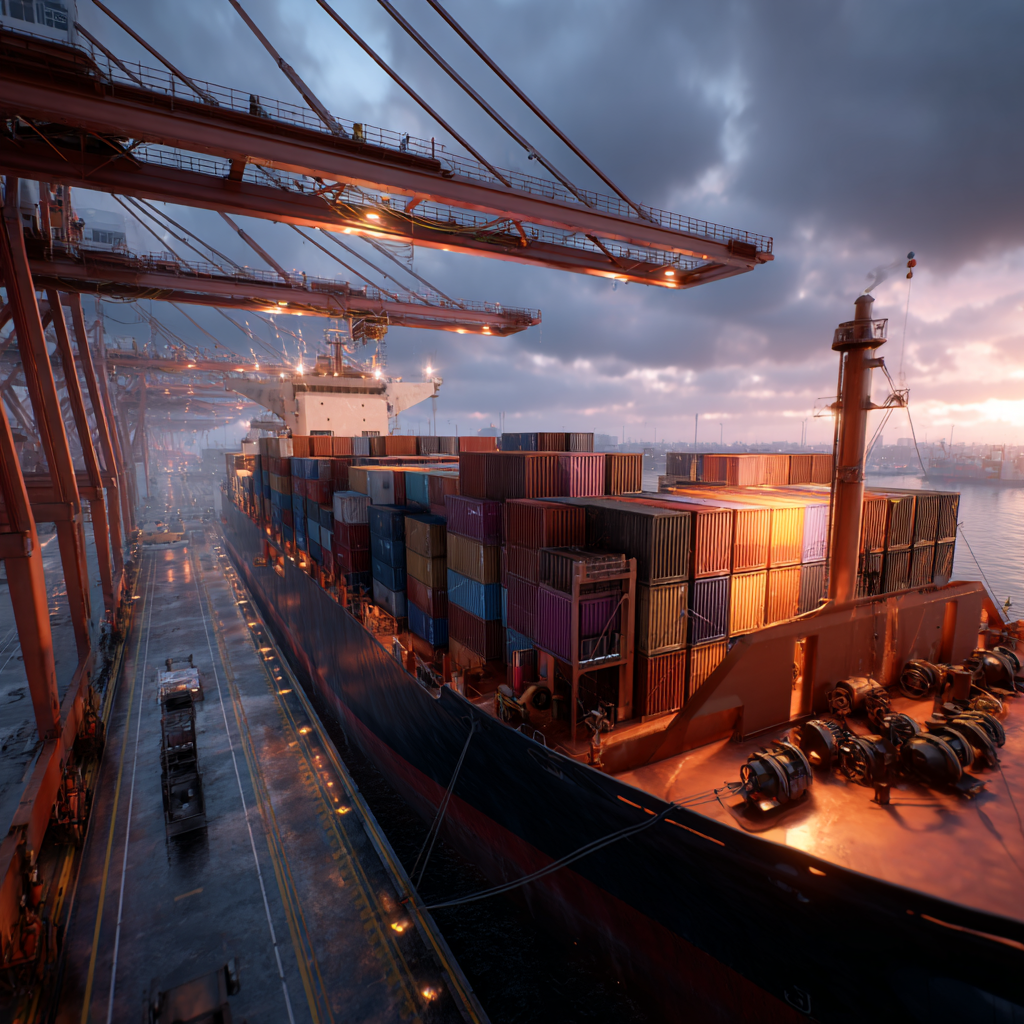
If you move your primary residence to the Netherlands, you may qualify for duty-free entry of your used personal belongings. This benefit is contingent on demonstrating that you have owned and used these goods for at least six months prior to the date of your relocation. Maintaining accurate records is essential to satisfy customs officials that your goods qualify for this exemption.
Prohibited and restricted items to avoid packing
Certain items are either banned or subject to rigorous scrutiny at the Dutch border, which could lead to delays or confiscation of your shipment. It is essential to be aware of safety and health restrictions that European authorities enforce strictly. Keep these categories in mind to avoid accidental inclusion:
- Firearms and ammunition without proper import permits
- Endangered plant and animal specimens
- Specific food products and agricultural items
- Counterfeit goods or pirated media
Adhering to these strict import guidelines ensures your sea-container moves through inspection as smoothly as possible.
Managing inventory lists and customs clearance paperwork
An exhaustive, itemized inventory list serves as the foundation for your customs declaration form. Every box should correspond to a line item that describes the contents, and all totals must be accurate to pass verification at the port. This inventory is a legal declaration; misrepresentation can lead to fines or re-inspection, so precision is required throughout the preparation of your moving documents.
Setting up your new life in the Netherlands
Understanding the Dutch housing market for expatriates
Finding a residence in the Netherlands can be a challenge, particularly in the Randstad area where demand is consistently high. Many expatriates prefer to rent initially while scouting neighborhoods, utilizing local platforms to identify apartments that fit their budget and lifestyle.
Navigating BSN registration and local municipal requirements
Your Citizen Service Number, or BSN, is the anchor for all your administrative functions once you arrive. You must register at your local city hall shortly after finding a permanent address. This number is required for taxes, payroll, school enrollment, and opening a bank account in your new hometown.
Accessing healthcare and essential local services
Healthcare in the Netherlands is of high quality and managed primarily through private insurers, which is a mandatory requirement for residents. You will find that working and traveling in the Netherlands integrates seamless health access into daily routines. If you are moving with children, review the Netherlands education checklist to ensure you understand local school catchment areas and enrollment procedures for non-native speakers.
Managing the costs of your international move
Factors that influence the total price of your move
Total costs fluctuate based on the volume of your shipment, the distance from your point of origin, and the level of service chosen. Shipping bulky furniture is generally more expensive than shipping personal electronics due to container capacity and fuel surcharges. Being aware of these variables allows for better prioritization of your shipping budget.
Identifying and planning for hidden moving costs
Beyond the base freight price, consider additional variables like destination port fees, insurance premiums, and specialized handling charges for fragile objects. These costs often go unnoticed by first-time movers but are standard in international trade. Keeping a buffer in your budget accounts for these potential expenses and prevents financial stress during the transition.
How to compare international moving quotes effectively
Comparison is vital, but always ensure you are comparing like-for-like services when requesting bids. Look for transparency regarding transit insurance and door-to-door handling in all estimates. Taylor International provides the clarity needed to get a quote and understand exactly what is included in your international relocation package.
Conclusion
Relocating to a new country like the Netherlands is a bold step that requires a mixture of meticulous preparation and adaptability. By addressing your visa requirements early, understanding the complexities of importing personal goods, and maintaining steady communication with your move manager, you can settle efficiently into your new Dutch environment. With the right support and systematic planning, your move becomes a manageable transition rather than an overwhelming challenge.
Frequently Asked Questions
Do I need a visa to move into the Netherlands from Canada?
While Canadians enjoy visa-free travel to the Netherlands for short tourist stays, a residence permit is mandatory if you plan to move there for long-term work, study, or family reunification. You should apply for the appropriate category before your arrival to align with Dutch immigration laws.
How can I open a bank account as an expat in the Netherlands?
Opening a bank account typically requires a BSN, which you receive after municipal registration. Most major Dutch banks allow expatriates to open accounts once they hold this number, though some may also require proof of residency or employment contracts.
Is it easy to find English-speaking schools for my children?
Many cities in the Netherlands offer international schools that conduct curricula in English, though spots can fill up quickly. You should research these options months in advance and look into municipal bridging programs if you choose to enroll your children in the local public system.
What should I look for in an international moving company?
Look for providers that offer full-service logistics, clear insurance terms, and experience with European customs requirements. It is beneficial to choose a company that demonstrates a commitment to transparent communication and provides detailed pre-move consultations to establish expectations.
Can I drive in the Netherlands with a Canadian license?
As a new resident, you can typically use your valid Canadian driver’s license for a limited duration, usually six months. After that period, you will need to exchange it for a Dutch license depending on diplomatic agreements or complete a local testing process.
How do I locate housing in a competitive market like Amsterdam?
Finding housing requires persistence, using online portals, and considering locations slightly outside the immediate city center to expand your options. Some expatriates hire professional housing agents who have access to listings before they appear on the public market.
How does the Dutch healthcare system work for newcomers?
Healthcare is mandatory and provided through private insurance policies that you must purchase once you become a resident. You have a wide degree of choice among insurers, and coverage applies to standard medical services, doctor visits, and hospital care base levels set by the government.
Leave a Comment