Moving overseas with a car from Canada: A practical guide to shipping, customs, and costs
Key Takeaways
Moving overseas with a car from Canada involves more than arranging ocean transport. The vehicle must make financial, regulatory, and practical sense within the wider household move.
- Compare the full import cost with buying or leasing at your destination.
- Confirm destination-country rules before booking transport.
- Prepare ownership, export, customs, and compliance documents early.
- Choose a shipping method and service level that match your vehicle and budget.
- Coordinate the car with household goods, pets, temporary transport, and arrival plans.
Understanding whether moving your car overseas is the right choice
A familiar vehicle can make settling into a new country easier, but shipping it is not always the most sensible option. The decision depends on the car’s value, condition, destination rules, and the length of your stay. Treat the vehicle as one part of an international household move rather than as a separate purchase.
Compare shipping costs with buying a vehicle at your destination
Start with a complete estimate, not only the ocean freight. Add transport to the Canadian departure port, export preparation, insurance, destination handling, duties, taxes, compliance work, registration, and possible storage. Then compare that figure with the cost of buying a similar vehicle after arrival, including financing and local taxes.
A car that is difficult to replace, adapted for a family’s needs, or still worth a substantial amount may justify the expense. For an older vehicle, however, import charges and modifications can quickly exceed its practical value.
Check whether your car meets destination-country standards
A vehicle that is legal to drive in Canada may not satisfy another country’s safety, emissions, lighting, or registration standards. Check the rules before shipping, because a vehicle can be delayed, modified, refused, or subject to additional charges after arrival.
For a move to the United States, review U.S. vehicle import requirements from Customs and Border Protection and confirm current guidance from the relevant agencies. Requirements can vary by vehicle age, model, origin, and destination jurisdiction.
Consider financing, leasing, insurance, and ownership restrictions
If the car is financed or leased, the lender or leasing company may need to approve export and international use. A lien can also prevent the vehicle from being exported until the required release or written authorization is available. Ask your insurer whether coverage continues during loading, ocean transit, customs processing, and delivery abroad.
Also check whether the destination allows temporary importation, requires local registration, or limits how long a newly arrived resident may drive a foreign-registered vehicle. These details can change the economics of the move.
Decide when selling the vehicle may be the simpler option
Selling in Canada may be preferable when the vehicle is older, has limited resale value abroad, or is unlikely to meet local standards without expensive work. It can also reduce the number of customs declarations and delivery arrangements during an already demanding relocation.
If you sell, include the timing in your move plan. You may need the car until departure, so arrange alternate transport for the final days and keep proof of sale, ownership transfer, and insurance cancellation with your records.
Preparing your car for international shipment
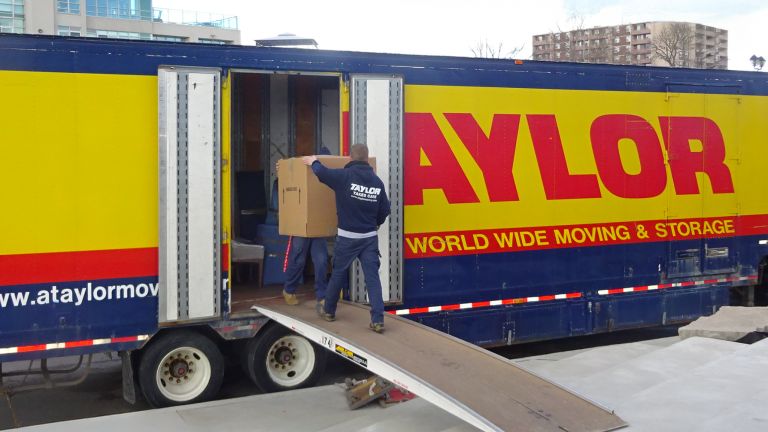
Preparation protects both the shipment and your schedule. A mover will need accurate vehicle details, clear ownership records, and a condition record that can be reviewed at handover. Taylor International provides international moving services, so vehicle planning should be discussed alongside the rest of your household shipment.
Gather ownership, registration, and lien-release documents
Collect the vehicle registration, proof of ownership, identification, purchase records where available, and any lender or leasing authorization. Export authorities and destination customs may request different documents, so do not assume that a Canadian registration document will satisfy every requirement.
Keep original documents accessible, and provide copies to the appropriate parties. If names or addresses differ between documents, resolve the inconsistency before the vehicle reaches the port.
Confirm the vehicle’s condition and complete a detailed inspection
Inspect the exterior, glass, wheels, interior, accessories, warning lights, and odometer. Take dated photographs from multiple angles and record existing scratches, dents, chips, and mechanical concerns. This creates a shared reference for handover and delivery.
The vehicle should also be operable if the selected shipping method requires it to be driven onto or off a vessel. Tell the mover about any mechanical issue, alarm system, modified suspension, or non-standard equipment before the quote is finalized.
Remove personal belongings and prepare the car for transport
Most vehicle shipments require the cabin, trunk, and storage compartments to be cleared. Personal items can complicate customs declarations, increase loss or damage risk, and may not be covered under vehicle transit protection. Remove toll transponders, spare paperwork, valuables, child seats if not approved for shipment, and loose accessories.
A short preparation list helps prevent last-minute omissions:
- Remove household goods and personal items from every compartment.
- Keep only the equipment specifically permitted by the shipping instructions.
- Leave keys, remotes, and alarm information clearly identified.
- Check fuel, battery, tire, and fluid requirements with the mover.
After the car is cleared, review the list with the person accepting it. The point is not merely tidiness; it is to make the shipment’s contents and condition unambiguous.
Arrange required cleaning, maintenance, and safety checks
Some destinations require an especially thorough clean to reduce the risk of soil, plant material, or other contaminants entering the country. Ask which cleaning standard applies and whether the vehicle must be inspected before export. A basic service can also identify low tire pressure, weak batteries, fluid leaks, or brakes that may create problems during handling.
Do not make modifications or repairs without checking destination requirements first. A change that improves compliance in one country may not address the rules in another, and receipts may be useful during later registration.
Choosing a shipping method and international moving provider
The right service depends on the vehicle, route, budget, protection needs, and how much coordination you want the mover to manage. Compare what is included from the first pickup to the final delivery, not just the advertised transport line. For a household move, Taylor International can help organize international moving services around the broader relocation plan.
Compare container shipping, roll-on/roll-off, and shared-container options
Roll-on/roll-off shipping generally involves driving the vehicle onto a specialized vessel, while container shipping places it inside a sealed container. A shared container can spread space costs across shipments, whereas a dedicated container may offer more control over loading and scheduling.
Consider the vehicle’s size, value, operability, destination port, and vulnerability to exposure. Ask whether personal belongings may be placed in the container, what declarations are required, and how those items affect coverage and customs treatment.
Understand port-to-port and door-to-door service
Port-to-port service may leave you responsible for inland transport at one or both ends, customs collection, and delivery from the destination port. Door-to-door service can reduce the number of separate arrangements, but it does not remove your responsibility to provide accurate documents or meet import rules.
Request a written explanation of each handoff. A clear quote should identify pickup locations, port charges, destination delivery limits, customs responsibilities, and any services that depend on local access or road conditions.
Evaluate vehicle coverage, liability, and transit protection
Ask what protection applies during inland movement, loading, ocean transit, unloading, storage, and final delivery. Check exclusions for personal property, mechanical failure, pre-existing damage, insufficient packing, or delays caused by customs. The mover’s standard liability may not equal the vehicle’s replacement value.
Keep the inspection report and photographs with the shipping documents. If you need additional insurance or valuation coverage, arrange it before handover rather than after the vehicle is already in transit.
Know which services your mover handles directly or through partners
International shipments commonly involve ports, customs representatives, inland carriers, and destination delivery teams. Ask who will communicate with you at each stage and which party is responsible for appointments, document submission, status updates, and exception handling.
Taylor International is an international moving company, and a useful provider conversation should cover the whole household move as well as the vehicle. You should leave the consultation knowing who to contact when a port schedule changes or customs requests clarification.
Planning the customs and import process
Exporting a car from Canada and importing it into another country are separate processes. Each side may have different forms, deadlines, inspections, and authorities. Begin with official government guidance for the destination, then confirm how your mover will support the required submissions.

Learn how export requirements differ from import requirements
Canadian export clearance establishes that the vehicle is leaving Canada, while destination import clearance determines whether it may enter and be registered. Completing one does not automatically satisfy the other. Country rules can also differ for permanent imports, temporary imports, returning residents, and new residents.
Ask for a process map showing what happens before the vehicle reaches the port, during export, and after arrival. That sequence makes it easier to spot a missing approval before it becomes a delay.
Prepare customs forms, invoices, and proof of ownership
Prepare consistent information for the vehicle identification number, make, model, year, value, ownership status, and intended use. Customs may require proof of ownership, registration, purchase documentation, identification, residence or immigration documents, and signed declarations.
Do not guess at a value or leave forms until the last week. A mismatch between the shipping instruction, invoice, registration, and customs declaration can lead to questions, storage, or rework.
Understand duties, taxes, tariffs, and other government charges
Import charges may include customs duty, value-added or sales taxes, tariffs, inspection fees, registration charges, and compliance work. Eligibility for relief can depend on residency, ownership period, vehicle classification, and the destination’s personal effects rules.
A Canada customs duty guide can help you distinguish government charges from mover, port, storage, and delivery fees. Treat any estimate as provisional until the destination authority or qualified customs professional confirms the applicable rules.
Check country-specific rules for the United States, United Kingdom, and Australia
The United States, United Kingdom, and Australia each have their own import, safety, emissions, tax, and registration requirements. Australia may involve particularly detailed inspection and biosecurity considerations, while a U.S. import can require coordination with agencies beyond customs. The United Kingdom may require local registration and tax steps after arrival.
For a cross-border move to the United States, use current agency guidance rather than relying on a general shipping quote. For overseas destinations, ask the mover to identify the destination agent and the exact authority responsible for final clearance.
Estimating the total cost of moving a car from Canada
There is no single price for moving a car internationally. The route, vehicle size, shipping method, season, port, destination rules, and required services all affect the total. A useful quote separates known charges from items that depend on inspection or customs decisions.
Account for inland transport to the departure port
If you live far from a Canadian port, the vehicle may need a truck move or another inland arrangement before ocean shipping begins. Distance, accessibility, operability, timing, and whether the vehicle is collected from a residence can all change this part of the estimate.
Ask whether the quote includes pickup, fuel-related charges, terminal handling, and appointment fees. If you drive the car to the port yourself, confirm where handover occurs and what inspection takes place there.
Include ocean freight, port fees, and destination handling
Ocean freight is only one line in the international transport cost. Port handling, documentation, terminal charges, unloading, destination agent services, customs processing, and delivery from the port may be billed separately.
Use a simple comparison when reviewing quotes:
| Cost area | What to confirm | Why it matters |
|---|---|---|
| Inland transport | Pickup point and Canadian terminal | Distance and access affect the first leg |
| Ocean transport | Shipping method and sailing schedule | Method changes protection and price |
| Port handling | Origin and destination terminal fees | Charges may appear outside freight |
| Customs and delivery | Clearance support and final destination | Responsibility can shift between providers |
The table is a starting structure, not a final price. Ask each provider to place its estimate under the same headings so that a low headline figure does not hide services you will need later.
Budget for inspections, modifications, registration, and compliance
Destination inspections, emissions or safety modifications, taxes, registration, plates, and local insurance may all sit outside the shipping quote. Some costs cannot be known until authorities examine the vehicle or confirm its eligibility.
Set aside a contingency amount and ask when each payment is due. This is especially useful when the vehicle’s arrival date and your household arrival date do not perfectly match.
Identify possible storage, demurrage, and unexpected charges
Storage can accrue if customs clearance is incomplete, documents are missing, or the vehicle cannot be collected when the terminal releases it. Demurrage or related port charges may also apply when cargo remains beyond the permitted free period.
Confirm free-time allowances, notification procedures, payment methods, and what happens if a vessel schedule changes. Written cost assumptions matter because they give you something concrete to review when circumstances change.
Coordinating the vehicle with your household move
A car rarely travels through the same chain as furniture, clothing, documents, and pets. It may arrive earlier or later, and customs may release one shipment before another. Planning the vehicle as part of the household schedule helps prevent an expensive gap after landing.
Align car shipping timelines with household goods transit
Compare the vehicle’s booking date, sailing window, customs process, and delivery estimate with the household shipment’s packing and departure dates. Avoid putting essential documents, medication, or arrival-day necessities in the car or a container unless their transport and customs treatment are clearly permitted.
A broader international move checklist can help you align what to ship, store, sell, or carry with you. Build one shared calendar for the vehicle, household goods, flights, accommodation, and destination appointments.
Decide whether to use sea freight or air freight for essential items
Sea freight is generally suited to larger household shipments that can travel on a longer schedule. Air freight may be useful for a small group of urgent belongings, but it should be reserved for items that genuinely need to arrive quickly because it is handled differently and priced separately.
Pack an arrival kit with documents, chargers, basic clothing, medications, and items needed for the first few days. Keep it with you or arrange its transport independently from the car.
Plan temporary transportation after arrival
Even a well-planned vehicle shipment can leave you without a car during port handling, customs clearance, inspection, or registration. Research public transport, short-term rental, rideshare availability, and local delivery options before departure.
If children, older relatives, or pets are travelling with you, temporary transport may need more space and flexibility than a standard rental. Include those needs in the budget rather than treating them as an afterthought.
Coordinate pets, furniture, and other specialized belongings
Pets, large furniture, artwork, sporting equipment, and vehicles each have different documentation and handling requirements. A detailed inventory helps your mover identify which items need special packing, declarations, permits, or separate timing.
Do not place restricted or regulated goods in the car simply to save space. Ask about destination rules for every unusual item, and keep pet arrangements on their own checklist so veterinary and travel requirements are not confused with vehicle paperwork.
Building a realistic timeline for an overseas move
An international vehicle move rewards early decisions. Sailing space, document reviews, customs questions, inspections, and final delivery can all affect the date you receive the car. Taylor International provides international moving services for residential relocations, so a consultation can address the vehicle alongside the rest of the move.
Start planning several months before your departure
Begin by confirming your destination, expected residence status, vehicle details, and preferred arrival window. Several months gives you time to compare shipping methods, request a complete quote, investigate eligibility, and decide whether selling is more practical.
If you are moving from Canada to the United States, cross-border planning may differ from an overseas shipment. The same early approach still helps because transport and customs decisions affect your household schedule.
Allow time for vehicle eligibility checks and paperwork
Do not book based only on a preliminary online estimate. Allow time for lender approvals, lien releases, export documents, destination eligibility checks, translations if needed, and corrections to inconsistent records.
Use the time before pickup to complete cleaning, maintenance, photography, and the final inspection. Those tasks are easier to manage while the vehicle is still at home.
Prepare for port schedules, customs clearance, and delivery delays
Vessel schedules can change, and customs may request additional documents or an inspection. Weather, terminal congestion, holidays, and destination delivery capacity can also affect the handover date. Keep your first weeks flexible where possible.
A realistic plan includes a primary delivery window and a backup arrangement for transportation, accommodation, and essential household needs. If your dates are fixed, request a quote early and ask which milestones the provider can confirm in writing.
Create a move-day checklist for Canada and your destination country
Before handover in Canada, confirm the vehicle is clean, empty, photographed, operable if required, and accompanied by the agreed documents and keys. Save digital copies of the inspection report, booking confirmation, customs paperwork, and contact details.
After arrival, confirm customs release, inspect the vehicle before accepting delivery, record any new damage, and complete local registration and insurance steps. A short checklist cannot remove every uncertainty, but it keeps small omissions from becoming expensive delays.
Conclusion
Moving overseas with a car from Canada is manageable when you decide early whether the vehicle is worth importing, verify destination requirements, prepare accurate documents, and coordinate transport with the rest of your household move. A clear quote and realistic schedule will not eliminate every variable, but they give you a stronger basis for handling costs, customs, and delivery with fewer surprises.
Frequently Asked Questions
Is it always worth shipping a car from Canada overseas?
No. Compare the complete shipping, import, compliance, tax, registration, and insurance costs with the price of buying a similar vehicle at the destination. Selling in Canada may be simpler for an older or low-value vehicle.
How early should I arrange international car shipping?
Start several months before departure when possible. This allows time for eligibility checks, lender approvals, export paperwork, vessel scheduling, customs preparation, and a backup plan if the vehicle cannot be imported as expected.
Can I ship personal belongings inside my car?
That depends on the shipping method, provider instructions, insurance terms, and destination customs rules. Never assume that belongings may remain in the vehicle; ask for written guidance and declare anything that is permitted.
What documents are commonly needed to export a car from Canada?
Common documents may include proof of ownership, registration, identification, lender or leasing authorization, and export or shipping forms. The exact requirements vary by destination and personal circumstances, so confirm them before pickup.
What is the difference between roll-on/roll-off and container shipping?
Roll-on/roll-off shipping moves an operable vehicle onto a specialized vessel. Container shipping places the vehicle inside a container and may offer dedicated or shared space. The better choice depends on cost, vehicle condition, protection needs, and route availability.
Will my Canadian car meet standards in another country?
Not necessarily. Safety, emissions, lighting, dimensions, and registration rules differ between countries and sometimes between local jurisdictions. Confirm eligibility and possible modifications before committing to shipment.
What costs are often missed in a vehicle shipping estimate?
Commonly overlooked items include inland transport, port and terminal handling, customs charges, inspections, modifications, taxes, registration, storage, demurrage, insurance, and destination delivery. Ask for a quote that separates each category.
Leave a Comment