International moving checklist Canada: A step-by-step guide for moving across borders and overseas

Key Takeaways
An international move becomes easier to manage when decisions are made in the right order. Use this checklist to organize your household, service, budget, paperwork, and arrival plans.
- Start planning well before your preferred moving date.
- Decide what to ship, store, sell, donate, or replace.
- Compare movers by service scope, experience, and shipment responsibility.
- Prepare detailed inventories and destination-specific documents.
- Keep essential items accessible while your shipment is in transit.
1. Start planning your international move
An international move involves more than transporting boxes from one address to another. You are coordinating a destination, a household, a budget, legal documents, and a delivery plan that may cross several transport systems. Begin with a clear picture of what is changing and what must remain stable.
A useful international move guide can help you map the major stages, but your own circumstances should drive the final plan. A family moving from Canada to the United States may have different timing and paperwork needs from someone moving overseas for retirement or study.
Define your destination, household needs, and moving goals
Write down the exact destination, expected length of stay, household size, and target arrival date. Consider access at both addresses, including stairs, elevators, narrow roads, parking restrictions, and whether the destination home will be ready when the shipment arrives.
Your goal might be a complete household relocation, a smaller shipment while you settle temporarily, or a staged move involving storage. Clarifying this early makes later decisions about packing, freight, and delivery much more practical.
Build a realistic timeline for Canada-to-US and overseas moves
Cross-border and overseas shipments need planning time for estimates, packing, transportation, customs preparation, and delivery coordination. Build in extra room for document requests, inspections, changes to housing, and delays outside your control.
Work backward from the date you need your belongings, not simply the date you leave Canada. Keep a calendar with quote deadlines, visa or permit tasks, packing dates, utility changes, travel arrangements, and the date you will need essential items at your destination.
Decide what to ship, sell, donate, store, or replace
Moving everything is rarely the most practical choice. Compare the usefulness and replacement cost of each item with its packing, transport, storage, and potential customs implications.
Create separate categories for shipment, sale, donation, storage, and disposal. Review the list room by room, then revisit it after you receive a quote. A second review often removes bulky items that no longer fit the new home or climate.
Account for family, retirement, school, and housing considerations
A move is also a change in daily life. Families should research schools, childcare, housing availability, healthcare access, and how children will manage the transition. Retirees may need to consider medications, insurance, pensions, banking, and who can help with decisions if plans change.
Before departure, confirm where you will stay if the permanent home is delayed. A practical moving abroad checklist can also prompt questions about visas, finances, housing, and local requirements that are easy to overlook while concentrating on the shipment.
2. Choose the right international moving service
The right mover should make responsibilities visible rather than leaving you to coordinate every handoff yourself. Ask what the service includes, who owns each stage, and how communication works when a shipment moves between countries or transport modes.
For a residential move, look for a provider that understands household shipments and can explain the difference between local collection, cross-border transportation, overseas freight, customs activity, storage, and final delivery. The cheapest initial figure may not represent the same scope of work.
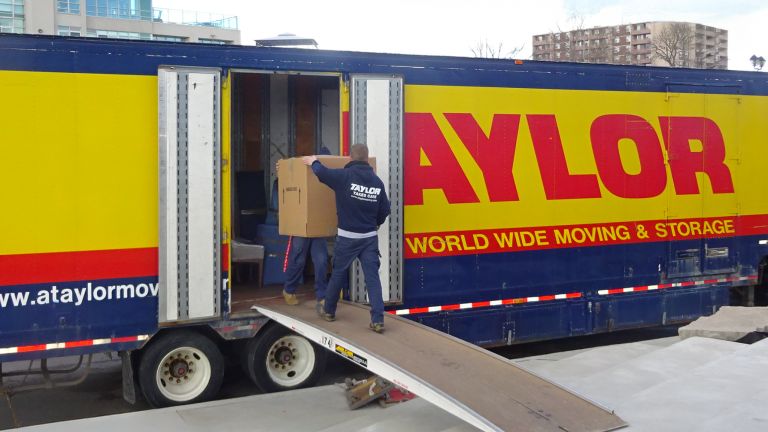
Compare full-service moving options for household shipments
Full-service options may include some combination of survey, packing, transportation, documentation support, storage, delivery, and unpacking. Compare like with like by asking each mover to describe the work in writing.
Taylor International provides overseas moving and storage services and serves all parts of the world. When reviewing any provider, ask whether the proposed service matches your actual route and whether special items or temporary storage are included rather than assumed.
Check mover experience, memberships, and accreditations
Ask how long the company has handled international household shipments and which memberships or accreditations apply to the service you are considering. These checks do not replace a detailed conversation, but they can help you assess whether a mover is accustomed to international procedures.
Read the estimate and service terms carefully. A trustworthy provider should be willing to explain limitations, exclusions, claims procedures, and the points at which another party may become involved.
Confirm who will pack, transport, clear, and deliver your belongings
Ask for a simple stage-by-stage explanation: who surveys the shipment, who packs it, who arranges transport, who supports customs clearance, and who delivers it at destination. Also ask who you contact when a question arises.
Clear responsibility matters because international shipments can involve several parties. If the mover cannot explain the handoffs, request clarification before signing or paying a deposit.
Ask how partners and destination agents are managed
Many international moves require destination partners or agents. Ask how those partners are selected, how information is transferred, and whether your primary contact remains responsible for coordinating the shipment.
Confirm the destination agent’s role, delivery conditions, storage arrangements, and any charges that may arise locally. The goal is not to eliminate every handoff, but to understand it before your belongings leave Canada.
3. Prepare your moving quote and budget
A moving quote is useful only when it reflects the shipment you actually intend to send. Volume, route, access conditions, packing requirements, freight method, customs work, storage, and delivery all affect the final cost.
Request enough detail to compare estimates fairly. Keep a record of what each quote includes, what it excludes, whether it is binding or subject to adjustment, and which charges may be collected before delivery.
Request accurate estimates based on volume, route, and services
Prepare a room-by-room inventory before requesting an estimate. Include large furniture, appliances, electronics, fragile pieces, outdoor items, and anything requiring special handling. Photos can help clarify unusual or oversized belongings.
Tell the mover about stairs, long carries, parking limitations, elevators, access windows, and destination conditions. Incomplete information can lead to a quote that looks attractive but does not cover the work required.
Compare sea freight, air freight, and shared-container options
Sea freight is often considered for larger household shipments with more flexible timing, while air freight may suit smaller shipments or items needed quickly. Shared-container services can be relevant when your volume does not fill a container, but the timetable and handling process should be explained.
Ask how each option affects transit planning, collection, storage, customs, delivery, and the contents you keep with you. The best choice depends on volume, urgency, destination, and the cost of replacing items after arrival.
Identify customs charges, storage fees, duties, and delivery costs
Separate the quote into transportation and additional costs. Ask about origin services, destination handling, customs-related charges, duties or taxes where applicable, storage, port or terminal fees, delivery access, and unpacking.
Use the following comparison when reviewing estimates:
| Cost Area | Question To Ask | Why It Matters |
|---|---|---|
| Origin services | Is packing, collection, and loading included? | These tasks can vary significantly by shipment. |
| Freight | Which transport method and route are quoted? | The method affects timing and handling. |
| Destination charges | Are local handling and delivery included? | Some charges arise after arrival. |
| Storage | What happens if the home is not ready? | Delayed occupancy may create extra costs. |
After comparing the rows, ask the mover to explain any unusually low or high amount. A clear budget should show which costs are confirmed and which depend on customs, access, inspection, or changes to the shipment.
Review valuation coverage and insurance coordination
Ask how your belongings are valued, what exclusions apply, and how a claim would be handled. Valuation protection and separate insurance are not always the same, so request a plain-language explanation of the available arrangements.
Keep receipts, photographs, appraisals, and inventory notes for valuable items. Discuss fine art, antiques, electronics, and fragile goods before packing so that the proposed protection matches the belongings being transported.
4. Organize documents for customs and border clearance
Documentation should be prepared alongside your inventory, not after the truck arrives. Customs authorities may need information about your identity, immigration status, household goods, ownership, and intended destination.
Requirements vary by country and can change. Review current official guidance for your route and ask your mover which forms they need from you, while remembering that you remain responsible for providing accurate information.

Create a detailed inventory for your household shipment
Describe each item clearly enough to identify it without opening every carton. Include quantities, approximate values, serial numbers where useful, and separate descriptions for valuable or unusual belongings.
Avoid vague entries such as “miscellaneous” when a more specific description is possible. Keep a copy of the inventory with your personal records and match box numbers to the list as packing progresses.
Gather passports, permits, visas, and destination documents
Collect passports, visas, permits, residence documents, work or study records, ownership papers, and any destination forms connected to your household shipment. Keep originals secure and provide copies only when requested.
Also plan documents for family members, pets, vehicles, medication, and special items. A document folder should travel with you rather than inside the shipment, especially when the shipment may arrive later.
Prepare customs forms for moves between Canada and the United States
Canada-to-US moves still require careful preparation even when the distance is relatively short. Confirm the forms and supporting records required for your status, destination, household goods, and any vehicle or regulated item.
Use a current country-specific source and review your inventory with the mover before collection. For broader preparation, the Canada customs moving guide explains why immigration status, origin, packing lists, and restricted items can affect the import process.
Check country-specific restrictions and import requirements
Do not assume that an item permitted in Canada will be permitted into another country. Food, plants, medications, alcohol, tobacco, firearms, batteries, chemicals, vehicles, and animal products may receive special treatment.
Check the destination authority’s current rules before packing. Declare items honestly and ask questions early; discovering a restriction at the border can create delays, extra costs, or disposal requirements.
5. Pack and protect your belongings
International packing must protect belongings through loading, transport, transfers, storage, and delivery. Export packing may differ from the cartons used for a short local move, particularly for furniture, fragile items, electronics, and pieces exposed to longer handling.
Decide which items should be professionally packed and which low-risk belongings you can prepare yourself. Keep an inventory as cartons are closed, and photograph valuable items and their condition before packing.
Separate restricted, prohibited, and high-risk items
Set aside anything that may be prohibited, restricted, hazardous, fragile, or difficult to transport. This includes aerosols, fuels, chemicals, perishable goods, certain batteries, plants, food, medications, and firearms, among other categories that depend on the destination.
Ask before placing uncertain items in a carton. A short conversation before packing is safer than finding an item during an inspection or after it has been refused for transport.
Use professional packing for furniture, electronics, and fragile goods
Professional packers can assess shape, weight, fragility, and the protection needed for extended handling. Furniture may need wrapping or crating, while electronics should be protected from impact, moisture, and loose movement inside the carton.
If you pack anything yourself, use strong materials, avoid overfilling, and record the contents. Leave room for the mover to repack or reinforce items if the original packaging is not suitable for international transportation.
Plan specialized handling for fine art and valuable possessions
Fine art, antiques, collections, instruments, and high-value possessions deserve an early discussion. Ask about condition reports, photographs, custom crating, climate considerations, access, and valuation documentation.
Do not hide valuable pieces among ordinary household goods. Identify them clearly to the mover and insurer, and confirm whether a specialist carrier or additional handling is needed.
Label boxes and keep essential items with you during transit
Use consistent box numbers and room labels, but do not place passports, medication, keys, financial records, chargers, work materials, or irreplaceable documents inside the shipment. Pack a separate arrival bag for the first days.
Keep these essentials with you:
- Identification, visas, permits, and travel documents.
- Medication, prescriptions, and basic toiletries.
- Chargers, a change of clothes, and important contact details.
- School, housing, healthcare, and financial records.
This small kit gives you breathing room if the shipment arrives later than expected. It also reduces the temptation to open carefully packed cartons simply to find something needed on the first night.
6. Plan for pets, vehicles, and other special logistics
Special items often determine the timing of an international move. Pets, vehicles, artwork, antiques, and delicate equipment may require separate documents, carriers, inspections, permits, or insurance arrangements.
Raise these topics when requesting the quote, not after the main shipment has been booked. A complete plan may involve different dates for the household goods and the special item.
Prepare pets for international travel and entry requirements
Check the destination’s rules for identification, vaccinations, health certificates, quarantine, approved transport, and arrival procedures. Requirements can depend on the animal, origin, destination, and date of travel.
Ask your veterinarian and the relevant destination authority for current guidance. Arrange the pet’s travel early, keep copies of records with you, and plan for safe care during any overnight or connecting travel.
Review options for shipping a vehicle across borders
A vehicle may require ownership documents, registration, financing clearance, import approval, emissions or safety compliance, and separate customs treatment. Confirm whether it can be imported before committing to transport.
Ask how the vehicle will be collected, protected, inspected, and delivered. Remove personal belongings unless the carrier and destination rules explicitly allow them, and photograph the vehicle’s condition before handover.
Arrange extra protection for antiques, artwork, and delicate items
Discuss specialized packing and handling for items that are irreplaceable or sensitive to vibration, temperature, moisture, or impact. Condition reports and photographs create a useful record before the item leaves your home.
For valuable possessions, confirm the protection terms in writing. If a piece needs custom crating, a specialist carrier, or a separate delivery appointment, include that work in the quote and schedule.
Allow additional time for inspections, permits, and specialized carriers
Build time for approvals, inspections, carrier availability, and customs questions. These steps may not align with the main household shipment, so avoid planning a pet, vehicle, or artwork arrival on the same day as your flight or lease start.
Create a fallback plan for temporary housing, storage, or local transportation. Taylor International lists overseas moving, cross-border moving, and storage solutions among its services, but the precise arrangements for a special item should always be confirmed for your shipment.
7. Manage moving day and arrival in your new country
Moving day is where preparation becomes a physical handoff. Keep the inventory, contact details, documents, and agreed service scope available, and walk through the home with the crew before work begins.
At arrival, expect the possibility that travel and shipment schedules will not match perfectly. A calm process for tracking, temporary essentials, inspection, and follow-up will help you settle in while outstanding delivery details are resolved.
Confirm pickup details, inventory records, and contact information
Confirm the date, arrival window, crew contact, access instructions, parking, elevator bookings, and payment status before collection. Walk through each room and point out items that are excluded, fragile, valuable, or going into storage.
Review the inventory as cartons are loaded and keep your copy accessible. If the address or phone number changes, update the mover immediately and confirm the change in writing.
Track shipment milestones and respond to customs requests
Keep a simple record of collection, packing completion, departure, arrival at the destination country, customs progress, release, and delivery scheduling. Respond promptly if the mover or customs representative requests a document or clarification.
Taylor International describes itself as an overseas moving and storage company serving all parts of the world. Regardless of provider, timely communication is especially useful when a shipment is moving through ports, warehouses, and border procedures.
Prepare temporary essentials for delays or split deliveries
Pack enough clothing, medication, toiletries, basic kitchen items, chargers, children’s necessities, and pet supplies for a reasonable delay. If your shipment is split between air and sea freight, plan around the later delivery rather than assuming everything will arrive together.
Arrange temporary storage or accommodation if the permanent home is not ready. Keep a small budget for local transport and replacement essentials, but avoid buying large items until you know what is arriving.
Inspect your delivery and document damage or missing items
Inspect cartons and furniture before signing final delivery paperwork. Note visible damage, missing boxes, broken items, or exceptions on the delivery record and take clear photographs.
Contact the mover promptly using the claims process in your agreement. Keep damaged packaging, inventory records, photographs, receipts, and any related correspondence until the matter is resolved.
Settle into housing, schools, healthcare, and local services
Once the shipment is delivered, shift from transport to settlement. Confirm housing arrangements, school enrollment, healthcare registration, banking, phone service, utilities, transportation, and local emergency contacts.
Give yourself time to establish routines rather than trying to finish everything in the first week. A well-organized arrival plan turns a long international move into a series of manageable tasks.
Conclusion
A successful international moving checklist Canada plan connects the practical details: define the move, choose a service carefully, budget for the full journey, prepare customs documents, protect your belongings, and plan for arrival. Taylor International can discuss international moving and storage needs with households planning a cross-border or overseas relocation; when you are ready, request a quote with your route, timing, inventory, and special requirements.
Frequently Asked Questions
How far in advance should I plan an international move?
Begin several months before your preferred moving date whenever possible. Overseas freight, documentation, housing, visas, packing, and special logistics can each require additional time.
What should I include in an international moving inventory?
List the contents of each box or room with useful descriptions, quantities, approximate values, and serial numbers where relevant. Identify valuable, fragile, restricted, or unusual items separately.
Is moving from Canada to the United States considered an international move?
Yes. Even though the countries share a border, household goods crossing between Canada and the United States still require transportation planning, documentation, and customs compliance.
Should I ship everything in my home?
Usually, you should compare the cost and usefulness of each item before deciding. Sort belongings into shipment, sale, donation, storage, replacement, and disposal categories.
What items may cause customs or transportation problems?
Rules vary, but food, plants, medications, alcohol, tobacco, firearms, batteries, chemicals, animal products, and vehicles may receive special treatment. Check current destination requirements before packing.
Should pets travel with the household shipment?
Pets should travel through an arrangement designed for animal welfare and destination entry requirements, not as ordinary household goods. Confirm veterinary documents, carrier rules, permits, and timing well in advance.
What should I do if my shipment arrives after I do?
Carry essential documents, medication, clothing, chargers, toiletries, and basic necessities with you. Arrange temporary accommodation and keep your mover updated about your contact details and delivery address.
Leave a Comment