Moving to USA from Australia: A complete guide for households and families

Key Takeaways
Moving to USA from Australia involves more than booking a shipment. Immigration, customs, timing, household decisions, and arrival planning all need to work together.
- Confirm your visa, work, residency, and state-level requirements before setting a final move date.
- Begin planning several months ahead so surveys, packing, shipping, and housing decisions have room to change.
- Compare sea and air freight alongside packing, insurance, customs, delivery, storage, and possible destination charges.
- Prepare a detailed inventory and check restrictions before household goods leave Australia.
- Choose a mover that explains responsibility, documentation, transit estimates, claims, and delivery from start to finish.
Understand the requirements before you move
The first stage of an international move is administrative, not logistical. Your right to enter and remain in the United States determines when you can travel, work, lease a home, and receive your household goods. Start with official government guidance and treat immigration advice as separate from moving advice.
Choose the right visa or immigration pathway
Australians may move for employment, study, family reasons, investment, or other qualifying circumstances, but the suitable pathway depends on personal facts. Review eligibility, application timing, dependants, and permitted activities with the relevant U.S. authorities or a qualified immigration professional. A moving company can coordinate around your approved plans, but it cannot choose or issue your visa.
Confirm entry, residency, and work requirements
Check whether each family member has the correct authorization and whether the documents allow the activities planned after arrival. Employment, school enrollment, healthcare access, banking, and a long-term lease may all involve different evidence. Keep a written record of expiry dates and copies of approvals so a shipment schedule does not get ahead of your legal position.
Organize passports, permits, and essential records
Create a secure digital and paper file for passports, visas, birth and marriage certificates, school records, medical information, insurance documents, and financial records. Carry irreplaceable originals rather than packing them into the shipment. A clear document system also helps when a customs representative or destination provider requests information quickly.
Check state-specific rules for your destination
The United States is not administratively uniform. Driver licensing, vehicle registration, school requirements, taxes, insurance, and some household or pet rules can vary by state. Once you know the destination, make a local checklist and confirm requirements with state and county agencies rather than assuming an Australian document will transfer automatically.
Build a realistic international moving timeline
A transpacific household move has several independent clocks: immigration, housing, packing, export handling, ocean or air transit, customs clearance, and final delivery. Planning them as one project reduces the chance of arriving before essential belongings or sending goods before your address is ready. A useful international moving timeline can help you compare these stages with your own dates.

Start planning before your preferred departure date
Begin several months before departure, especially if you are moving a family or shipping a substantial household. Early planning leaves time to confirm visa dates, obtain a residence, compare services, sell unsuitable items, and arrange pets or vehicles. It also gives the mover enough information to build a realistic estimate rather than a rushed approximation.
Schedule surveys, quotes, packing, and collection
A survey helps establish the likely volume, access conditions, packing needs, and specialist requirements. Ask when the quote expires, what assumptions it makes, and whether collection and packing occur on separate days. Reserve dates only after checking that they fit your travel, property handover, and housing arrangements.
Allow time for customs clearance and delivery
Port arrival is not the same as delivery to your new home. The shipment may need documentation review, inspection, release, inland transport, and an appointment at the destination address. Tell your mover about elevators, parking restrictions, stairs, narrow access, and building booking rules before the delivery window is set.
Plan for delays, storage, and temporary housing
Weather, vessel schedules, port congestion, inspections, missing documents, and changes to your address can affect the plan. Keep essential clothing, medication, work equipment, school items, and important records with you. If your home is not ready, arrange temporary accommodation and ask in advance about storage options and the charges that apply.
Estimate the cost of moving from Australia to the USA
The price of moving household goods depends on volume, origin and destination access, service level, shipping method, packing, and timing. A low headline figure may exclude work that becomes necessary later, so compare written estimates on the same basis. A complete cost picture is more useful than a tempting initial number.
Understand what an international moving quote includes
Ask whether the estimate covers professional packing, materials, collection, export handling, freight, customs documentation support, destination transport, delivery, and unpacking. Confirm whether the quote is door-to-door or port-to-port and whether a survey was completed. The more specific the inventory and access information, the less likely the final scope is to change unexpectedly.
Compare sea freight and air freight costs
Sea freight is generally considered for larger household shipments where transit time allows, while air freight can suit smaller or urgent consignments. The right choice depends on the volume, deadline, budget, and goods being shipped. Compare total delivered cost rather than freight alone, since handling and destination services may apply to either method.
| Cost area | Questions to ask | Why it matters |
|---|---|---|
| Origin services | Are packing, collection, and export handling included? | These tasks can materially change the starting price. |
| Freight | Is the shipment moving by sea or air, and on what basis? | Method and volume affect timing and cost. |
| Destination services | Are customs support, delivery, and access included? | Arrival charges are not always part of a headline quote. |
| Protection | What insurance or valuation option is available? | Cover should match the value and nature of the goods. |
Use the table as a conversation guide, not as a substitute for a tailored survey. A dependable quote explains exclusions, assumptions, currency, validity period, and the process for approving additional work.
Budget for packing, insurance, customs, and delivery
Set aside funds for professional packing, custom crating, transit protection, customs-related work, storage, and delivery conditions. Ask how fragile, antique, or high-value items are assessed and whether they require separate handling. Keep an emergency margin for practical arrival costs such as temporary accommodation or replacement essentials.
Identify potential taxes, duties, storage, and destination charges
Personal effects may still be subject to documentation requirements, inspection, duties, taxes, or other charges depending on the circumstances and the goods. Storage can arise when customs is incomplete or the delivery address is unavailable. Request a written explanation of possible charges and the event that would trigger each one.
Decide what to ship to the United States
Shipping everything is rarely the simplest financial decision. Compare replacement cost, sentimental value, condition, dimensions, and likely usefulness in the new home. The best shipment is usually the one that supports daily life without carrying avoidable weight and uncertainty across the ocean.
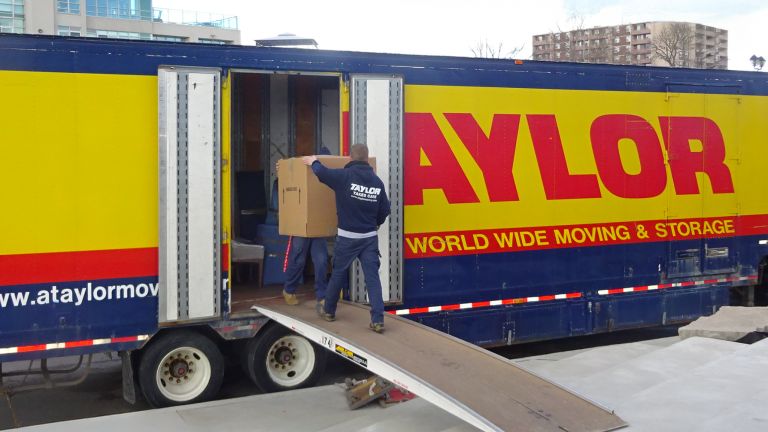
Compare the value of shipping household goods
Measure furniture and appliances against local availability, compatibility, and the cost of transporting them. Check voltage, plugs, dimensions, and warranty arrangements for electronics. Items with modest replacement value may not justify international freight, while a well-made or meaningful piece may be worth shipping despite its size.
Sort items into ship, sell, donate, or store
Work room by room and involve every adult in the household. A simple four-way decision prevents last-minute uncertainty:
- Ship items that are useful, difficult to replace, or personally important.
- Sell items that have good local value but are costly to transport.
- Donate or responsibly dispose of items that are replaceable or unsuitable.
- Store items only when there is a clear future need and a defined review date.
After sorting, revisit the ship pile with the estimated volume in mind. Reducing a shipment before the survey can improve accuracy and make packing day calmer.
Check restrictions on food, plants, medications, and household goods
Do not assume an item permitted in Australia will be accepted in the United States. Food, plants, soil, animal products, medications, firearms, chemicals, and some sporting or outdoor equipment may require special declarations or may be prohibited. Ask the mover and consult the relevant U.S. authorities before packing anything uncertain.
Plan separately for fragile or high-value belongings
Fine art, antiques, instruments, collections, and delicate electronics need more than ordinary carton packing. Photograph condition, record identifying details, and discuss crating, handling, and protection before the survey. Keep appraisals, purchase records, and certificates with your essential documents rather than inside the shipment.
Prepare your household goods for customs and transport
Customs documents describe what is entering the country, so accuracy matters. Vague labels such as “miscellaneous” make review harder and can create questions about ownership, value, or admissibility. Start the inventory while decluttering, then update it as items are sold, donated, or added.
Create an accurate inventory and packing list
List each carton and its contents in plain language, including quantities and approximate values where requested. Number boxes consistently and keep a copy of the final inventory outside the shipment. Your records should match the packing process; if something changes, tell the mover rather than relying on memory later.
Gather documents for U.S. customs clearance
The exact paperwork depends on your shipment and circumstances, but may include identification, visa or entry evidence, shipping documents, inventories, declarations, and information about specialized goods. Provide requested documents promptly and keep copies of every submission. A customs delay is often easier to resolve when the household can answer a specific question quickly.
Understand inspection risks and prohibited items
Shipments can be examined, and an inspection may add time or cost even when the inventory is honest. Dirty outdoor equipment, undeclared food, plant material, and restricted goods can attract particular scrutiny. Clean, dry, and photograph items that may raise questions, and remove anything that cannot be legally imported.
Protect fine art, antiques, electronics, and other specialized goods
Describe condition before packing and flag fragile or high-value items during the survey. Specialist packing, custom cases, climate considerations, and separate valuation may be appropriate. Do not place passports, medication, jewelry, irreplaceable records, or other essentials in the shipment.
Arrange extra logistics for pets and vehicles
Pets and vehicles should be treated as separate workstreams, not as last-minute additions to the household inventory. Airline policies, import rules, health documentation, vehicle standards, and registration requirements can all affect timing. Begin by identifying the rules for the destination state and the specific carrier or transport method.
Prepare pets for airline and import requirements
Contact the airline and relevant authorities early to understand crate standards, booking windows, route restrictions, and arrival procedures. Ask your veterinarian about a travel plan that considers your pet’s health and temperament. Build a separate itinerary so the animal is not exposed to unnecessary waiting between flights and ground transport.
Check vaccinations, microchips, and health certificates
Requirements can vary according to the animal, origin, destination, and current rules. Confirm whether a microchip, vaccination record, parasite treatment, or health certificate is needed and how recently it must be issued. Keep originals and digital copies accessible during travel.
Compare vehicle shipping options and import rules
Before shipping a car, confirm whether it meets U.S. safety and emissions requirements and whether modifications, declarations, duties, or inspections may apply. Compare the full import and transport cost with selling the vehicle in Australia and buying another after arrival. Remove personal belongings and follow the carrier’s preparation instructions.
Plan for registration, insurance, and driving requirements
A vehicle that clears import procedures may still need state registration, title work, insurance, and an appropriate license. Check deadlines and required inspections with the destination state. Arrange temporary transportation if the vehicle will not be available when your household arrives.
Choose a reliable international moving company
A professional mover should make responsibilities visible, not hide them behind a single price. Look for clear communication about the origin team, international transport, customs coordination, destination delivery, storage, and claims. For households in Canada or elsewhere arranging a global move, Taylor International provides international moving services; ask for a scope that matches your route and goods.
Verify licensing, accreditations, and insurance
Ask which licenses, memberships, and insurance arrangements apply to the companies handling your shipment. Confirm the legal entity named in the contract and the process for making a claim. Independent reviews can add context, but they should not replace checking written terms and credentials.
Confirm who manages each stage of the shipment
International moves often involve more than one operational team. Ask who collects the goods, books freight, prepares documentation, communicates with customs, arranges destination delivery, and answers questions after departure. A single point of contact is useful, but the contract should still identify the parties responsible for each stage.
Compare moving quotes, services, exclusions, and transit estimates
Place estimates side by side and compare the inventory, packing level, access assumptions, freight method, delivery terms, protection, storage, and exclusions. Transit estimates should be treated as planning ranges rather than promises. If you are also reviewing cross-border moving services, use the same discipline: route, scope, and destination responsibilities should be explicit.
Ask how the mover handles claims, delays, and customs issues
Before signing, ask what happens if goods are damaged, a vessel is delayed, customs requests further evidence, or the delivery address changes. Understand notification deadlines and which documents support a claim. A calm, specific answer is more valuable than a vague promise that problems will never occur.
Plan delivery, unpacking, and settling into your new home
The move is not finished when the container or air shipment is released. Confirm delivery access, unpacking expectations, debris removal, storage release, and the condition-report process. Taylor International’s Overseas Moving service is relevant to the broader international household context, while your own quote should state exactly what is included for this shipment.
Ready to Plan Your Move
A well-organized international move starts with a conversation about your route, household volume, timing, and special requirements. Taylor International can help you explore international move management and request a moving quote suited to your household’s plans.
Conclusion
Moving to USA from Australia is easier to manage when immigration, shipping, customs, household choices, pets, vehicles, and arrival arrangements are planned as connected pieces. Begin early, keep records accurate, compare complete scopes, and choose a mover that explains the journey from collection through delivery.
Frequently Asked Questions
How early should I start planning a move from Australia to the USA?
Start several months ahead when possible. Visa timing, housing, surveys, packing, freight schedules, customs clearance, and delivery all need space for changes or delays.
Is sea freight or air freight better for an international move?
Sea freight is commonly considered for larger shipments when time allows, while air freight may suit smaller or urgent consignments. Compare the complete delivered cost and deadline rather than freight price alone.
What documents are usually needed for household goods?
Requirements vary, but households may need identification, immigration or entry documents, shipping records, inventories, declarations, and supporting information for restricted or specialized goods. Confirm the current list for your circumstances.
Can I ship food and plants to the United States?
Some food and plant items may be restricted, prohibited, or subject to inspection and declarations. Check current U.S. import guidance before packing them, and ask your mover about anything uncertain.
Should I ship my car from Australia?
Compare the full transport, import, compliance, registration, insurance, and possible modification costs with selling the vehicle and buying another after arrival. Eligibility depends on the vehicle and applicable U.S. requirements.
How are pets moved internationally?
Pet relocation may involve airline rules, an approved crate, identification, vaccinations, health certificates, and destination-specific requirements. Start early and coordinate with a veterinarian and carrier.
What should I look for in an international moving company?
Check credentials, insurance, written scope, shipment responsibility, customs support, transit estimates, exclusions, claims procedures, storage terms, and delivery arrangements. A reliable quote should make those details easy to understand.
Leave a Comment