Moving to Canada from Australia: A practical guide to planning your international move
Key Takeaways
Moving overseas is easier to manage when the shipment, paperwork, timing, and arrival plan are considered together.
- Confirm the immigration and entry arrangements separately from your household-goods shipment.
- Start planning several months ahead, especially if you are moving pets, vehicles, or valuables.
- Compare quotes by scope, exclusions, delivery terms, and likely additional charges.
- Prepare a detailed inventory and check restricted-item requirements before packing.
- Choose an international moving provider that explains responsibility at every stage.
Understand the Australia-to-Canada moving process
Moving to Canada from Australia involves more than placing boxes on a ship. You are coordinating an international household shipment, export arrangements in Australia, Canadian import procedures, and delivery to a new address. Your immigration status and your moving plan should be treated as related but separate pieces of the relocation. A clear scope at the beginning prevents many expensive surprises later.

What an international household move includes
A household move commonly includes a survey or inventory, packing, pickup, transport to an Australian port, sea or air freight, customs processing, and delivery in Canada. Depending on the quote, it may also include unpacking, debris removal, storage, or specialized handling. Ask which services are included rather than assuming that “door-to-door” covers every local charge. For a broader overview of international planning, this international moving guide is a useful companion.
Choosing between door-to-door and port-to-door service
Door-to-door service is designed around collection at your Australian residence and delivery to your Canadian residence, subject to access and destination conditions. Port-to-door generally means you arrange or manage the first transport leg to the origin port, while delivery is organized after arrival. Port-to-port arrangements can appear simpler, but they leave more coordination with you. Compare the handoff points carefully, including who unloads, clears, collects, and delivers the shipment.
How Australian pickup and Canadian delivery work
At pickup, the crew confirms the goods being shipped, protects the home, and loads the agreed items. The shipment may then be consolidated with other cargo or packed into a dedicated container, depending on its size and service plan. After the ocean leg, Canadian procedures, terminal handling, and final transport affect when the delivery appointment can be set. Keep essentials with you because the shipment will not arrive as quickly as your flight.
When to involve an international moving company
Speak with a provider before you have finalized every detail. An early consultation can reveal whether a lift, long carry, storage period, customs document, or special packing requirement affects the plan. Taylor International provides overseas moving and storage solutions, so its role is relevant when your move involves international transport and a gap between departure and delivery. For practical preparation, you can also request a move quote once you know your approximate dates and inventory.
Build a realistic moving timeline
A useful timeline works backward from the date you need your Canadian home ready. International freight has more handoffs than a domestic move, and schedules can change around sailing availability, terminals, inspections, and local delivery capacity. Begin with a broad window rather than promising yourself an exact arrival day. The Canada destination planning guide can help you organize the same questions from the arrival side.
How far in advance to request quotes
Request estimates several months before departure, particularly during busy moving periods or when you need a full household pack. Earlier quotes give you time to compare inventories, remove unwanted goods, secure travel arrangements, and address documents. If you are moving a pet, vehicle, artwork, or antique, raise it at the first consultation. Those items can influence both the price and the schedule.
What to arrange before packing begins
Before packing day, confirm your Canadian address or temporary delivery plan, decide what will travel separately, and check the status of your immigration or work arrangements. Gather passports, shipment information, contact details, and any documents requested by the mover or authorities. It is also sensible to photograph valuable belongings before they are packed. Keep a small arrival kit aside with clothing, medication, chargers, and basic household supplies.
Typical sea freight and delivery stages
Sea freight usually moves through several stages: survey and quotation, packing and pickup, export preparation, port handling, sailing, arrival processing, customs review, and final delivery. The longest part is not always the sailing itself; local handling and release can also affect the date. A provider should explain which milestones it can confirm and which depend on carriers or authorities.
Common causes of delays and how to reduce them
Delays often arise from incomplete information, late decisions, restricted goods, missed documentation, port congestion, or difficulty accessing the destination address. You cannot control every external event, but you can reduce avoidable hold-ups by keeping contact details current and replying promptly to document requests. Build flexibility into housing and travel plans instead of tying every arrangement to one estimated delivery date.
Estimate the cost of moving to Canada from Australia
The price of an overseas move is shaped by the amount you ship and the work required around it. Distance matters, but so do packing standards, access at both homes, freight method, storage, customs handling, and insurance. A low initial figure may simply exclude services that another quote includes. The goal is not the cheapest number in isolation; it is a comparable description of the complete move.
The factors that affect your moving quote
Movers generally need to understand the shipment volume, origin and destination addresses, access conditions, preferred dates, packing level, and any specialty items. Stairs, narrow streets, elevators, long carries, and waiting time can change the labor involved. Currency movements and third-party charges may also affect the final amount. A written survey and itemized estimate are more useful than a rough online calculator.
Sea freight versus air freight costs
Sea freight is usually considered for a larger household or goods that can travel on a slower schedule. Air freight suits a smaller volume or belongings needed soon after arrival, but available weight and volume make it a different pricing exercise. Many families use a mixed approach: essential items travel separately while the main household shipment goes by sea. Ask about minimum charges, destination fees, and the point at which storage begins.
Packing, pickup, delivery, and storage charges
Packing can be priced by the amount of work, the type of goods, and whether items need crates or other protection. Pickup and delivery may include local transport, stairs, elevators, waiting time, or difficult access. Storage adds a separate period of handling and warehouse space, so confirm whether it is charged monthly and whether delivery is included later. The following comparison helps identify gaps between estimates:
| Quote area | What to confirm | Why it matters |
|---|---|---|
| Packing | Full pack, partial pack, or self-pack | The labor and protection level differ |
| Freight | Sea, air, consolidated, or dedicated | Transit and pricing assumptions change |
| Delivery | Address, access, unpacking, debris removal | Arrival work may otherwise be excluded |
| Storage | Duration, handling, and redelivery | A temporary plan can become a major charge |
Read the quote beside your inventory, not separately from it. If a service is absent or described vaguely, ask for clarification before accepting the estimate. A general international cost guide may also help you think through expenses beyond freight, although your own shipment details determine the actual quote.
Customs, taxes, insurance, and other possible fees
Customs-related costs, duties or taxes where applicable, inspections, port charges, documentation, valuation, and insurance can sit outside the headline transport amount. Ask who pays each charge and whether the quote includes destination handling. Insurance terms also differ: understand the valuation basis, exclusions, claim process, and whether packing requirements affect cover. This is where a careful conversation can be worth more than a seemingly attractive discount.
Prepare your household goods for international shipping
Every item you do not ship is one less item to pack, document, protect, and move across the ocean. Begin room by room, separating essentials from replacements that may be easier to buy in Canada. Check rules before setting aside food, plants, outdoor equipment, or other goods that may raise biosecurity or import questions. Good preparation reduces volume without turning the process into a rushed clear-out.
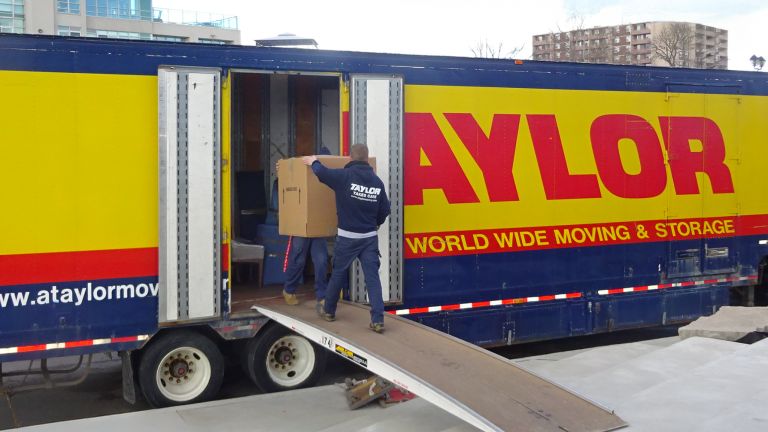
What to pack, sell, donate, or discard
Start with items that are costly, meaningful, difficult to replace, or well suited to your new home. Sell or donate duplicates, worn furniture, low-value bulky goods, and appliances that may not suit Canadian electrical standards. Discard anything unsafe, leaking, perishable, or prohibited. Keep a separate “do not pack” area so everyday items are not accidentally loaded.
How professional export packing protects your belongings
Export packing is designed for repeated handling, stacking, movement, and a long journey rather than a short trip across town. Crews may wrap furniture, protect corners, cushion fragile goods, and label packages so the inventory can be checked later. Professional packing also creates a clearer record of condition and contents. Taylor International describes itself as an overseas moving and storage company serving all parts of the world, which fits the cross-continental nature of this work.
Items that may be restricted or require special handling
Rules can apply to food, medicines, plants, animal products, chemicals, firearms, batteries, alcohol, and goods made from protected materials. Cleaning equipment, camping gear, bicycles, and gardening tools may need cleaning or special declarations. Do not hide an uncertain item inside a box; disclose it and ask how it should be handled. Requirements can change, so verify current Canadian guidance close to shipment time.
Preparing furniture, electronics, appliances, and valuables
Clean furniture and outdoor equipment before packing, and allow wet or recently treated items to dry fully. Make a note of electronics, serial numbers, and visible condition, while keeping sensitive data backed up. Valuables should be identified individually and discussed with the mover before packing. If an appliance will not suit the destination’s voltage or plug configuration, its sentimental value may be the deciding factor rather than its practical use.
Manage customs and shipping documentation
Paperwork is often the part of moving that creates the most uncertainty. Customs officers need a truthful picture of what is entering the country, while the mover needs enough detail to coordinate transport and delivery. Names, addresses, dates, item descriptions, and quantities should match across documents wherever possible. Treat every form as part of the shipment, not as an administrative afterthought.
Documents you may need for your household shipment
Depending on your circumstances, you may need identification, travel or immigration documents, a packing inventory, shipping instructions, proof of ownership, and forms requested for import or customs clearance. A vehicle, pet, artwork, or controlled item can require additional records. Your moving provider should explain the documents it needs and when they are due, but you remain responsible for supplying accurate information.
Creating an accurate packing inventory
An inventory should describe items plainly enough for someone who was not present at packing to understand them. “Kitchen goods” is less useful than “six used ceramic plates” or “one stainless-steel saucepan.” Record quantities, brands or models when relevant, and approximate values for high-value belongings. Keep a copy with photographs and note which goods are traveling separately.
Declaring new, used, and high-value items
Used household goods should be described honestly, and recently purchased items should not be presented as old possessions. High-value goods deserve individual descriptions, ownership details, and supporting receipts or appraisals where available. The aim is consistency, not an artificially low valuation. If you are unsure how to classify something, ask before the inventory is finalized.
How customs inspections can affect delivery
An inspection may require extra time, handling, documentation, or charges, particularly when an item is unclear or a declaration needs review. It does not necessarily mean there is a problem, but it can move delivery outside the first estimate. Keep your phone and email available after the shipment leaves Australia. Fast responses can help resolve questions without adding another avoidable delay.
Plan for pets, vehicles, and specialty belongings
Special belongings need their own mini-project inside the household move. Pets have health and entry requirements, vehicles have import and registration questions, and fine items need stronger protection and valuation. These arrangements may not follow the same timetable as ordinary cartons. Discuss them early, even if you later decide to use a separate specialist.
Preparing pets for an international move
Check Canadian entry requirements, veterinary records, identification, vaccinations, permits, and airline conditions well in advance. Travel crates and acclimatization deserve attention, especially for anxious animals. Ask whether your household mover coordinates pet logistics or whether you need a dedicated pet service. Keep essential medication and records with you rather than in the sea shipment.
What to know before shipping a vehicle
A vehicle can involve export paperwork, cleaning, shipping restrictions, taxes, inspection, compliance, and registration after arrival. Gather the title or ownership documents, vehicle details, and finance information before requesting a price. Compare the complete landed cost with replacing the vehicle in Canada. Never assume that a household-goods quote includes vehicle transport.
Moving artwork, antiques, and other fragile items
Photograph fragile and valuable pieces, record their condition, and disclose their materials, age, dimensions, and value. A painting, sculpture, antique, or mirror may need a custom crate, climate-aware handling, or a separate insurance arrangement. Ask how the item will be packed and whether the proposed cover requires professional packing. Clear descriptions protect both the object and the accuracy of the shipment record.
Coordinating extra time and specialized insurance
Specialty items can add time at the origin, during export, or at delivery. They can also require valuation evidence and insurance terms that differ from ordinary household goods. Put those assumptions in writing and leave room between arrival and any fixed event. A patient schedule is usually safer than trying to make a complex item fit an ordinary delivery window.
Choose a reliable international moving provider
The right provider makes the process understandable before it makes it busy. Look for a company that can explain the route, handoffs, paperwork, exclusions, and escalation path in plain language. Taylor International identifies its service offering as international moving, including overseas moving and storage solutions, so it is relevant to a residential move that crosses continents rather than a local relocation. Ask for clarity, not simply reassurance.
Questions to ask before accepting a quote
Ask who surveys the shipment, who packs it, which carrier handles the freight, and who manages destination delivery. Confirm the planned service level, payment schedule, cancellation terms, storage arrangements, and treatment of damage or loss. You should also ask what happens if your address changes or the shipment is inspected. Written answers make later comparisons much fairer.
Comparing services, exclusions, and delivery terms
Put competing estimates into the same frame: inventory, packing, freight method, pickup, customs support, delivery, storage, insurance, and taxes or third-party charges. Pay close attention to “estimated,” “subject to,” and “not included.” Delivery to a residence may differ from delivery to a terminal or warehouse. For another perspective on evaluating a move to Canada, see this Canada relocation checklist.
Checking insurance, affiliations, and shipment responsibility
Ask what protection is offered, what exclusions apply, and how a claim is made. Confirm which company is contractually responsible at each stage and whether partners or destination agents will be involved. Memberships and affiliations can be useful questions, but they should supplement—not replace—the written service agreement. The clearest provider will explain responsibility without making you decode industry language.
What to expect from communication and shipment tracking
Before booking, agree on the main contact, update frequency, document deadlines, and the milestones you will receive. Tracking may show broad shipment events rather than a precise live location, so ask what the system actually reports. Keep your own file of inventories, receipts, emails, and revised dates. Reliable communication is less about constant messages than about timely, usable information when a decision is needed.
Move With A Clear Plan
An Australia-to-Canada household move becomes more manageable when you separate immigration decisions from shipping decisions, reduce the load early, and make every handoff visible. Start with a realistic window, prepare truthful documents, and choose a provider whose quote explains both the work and the limits. With that foundation, the journey from pickup in Australia to delivery in Canada can feel planned rather than mysterious.
Frequently Asked Questions
How long does moving to Canada from Australia take?
The total time depends on packing, origin transport, sailing schedules, customs processing, and final delivery, so ask for a range rather than relying on one fixed date.
Should household goods travel by sea or air?
Sea freight is generally suited to a larger shipment that can wait, while air freight may suit a smaller amount of urgent belongings; a mixed approach is also possible.
How early should I start planning an international move?
Several months is a sensible starting point, with more time needed for pets, vehicles, specialty items, storage, or busy travel and shipping periods.
What should I do with restricted items?
Disclose anything uncertain before packing and check current Canadian import and biosecurity requirements rather than placing the item in an ordinary carton.
Are customs charges included in an international moving quote?
Not always. Ask whether duties, taxes, inspections, terminal handling, documentation, and destination charges are included or billed separately.
Can I ship my car with my household goods?
Vehicle shipping is often a separate service with its own export, import, compliance, cleaning, registration, and insurance requirements.
How can I compare international movers fairly?
Compare equivalent inventories and service scopes, then review exclusions, delivery terms, insurance, responsibility, communication, and storage—not just the headline price.
Leave a Comment